
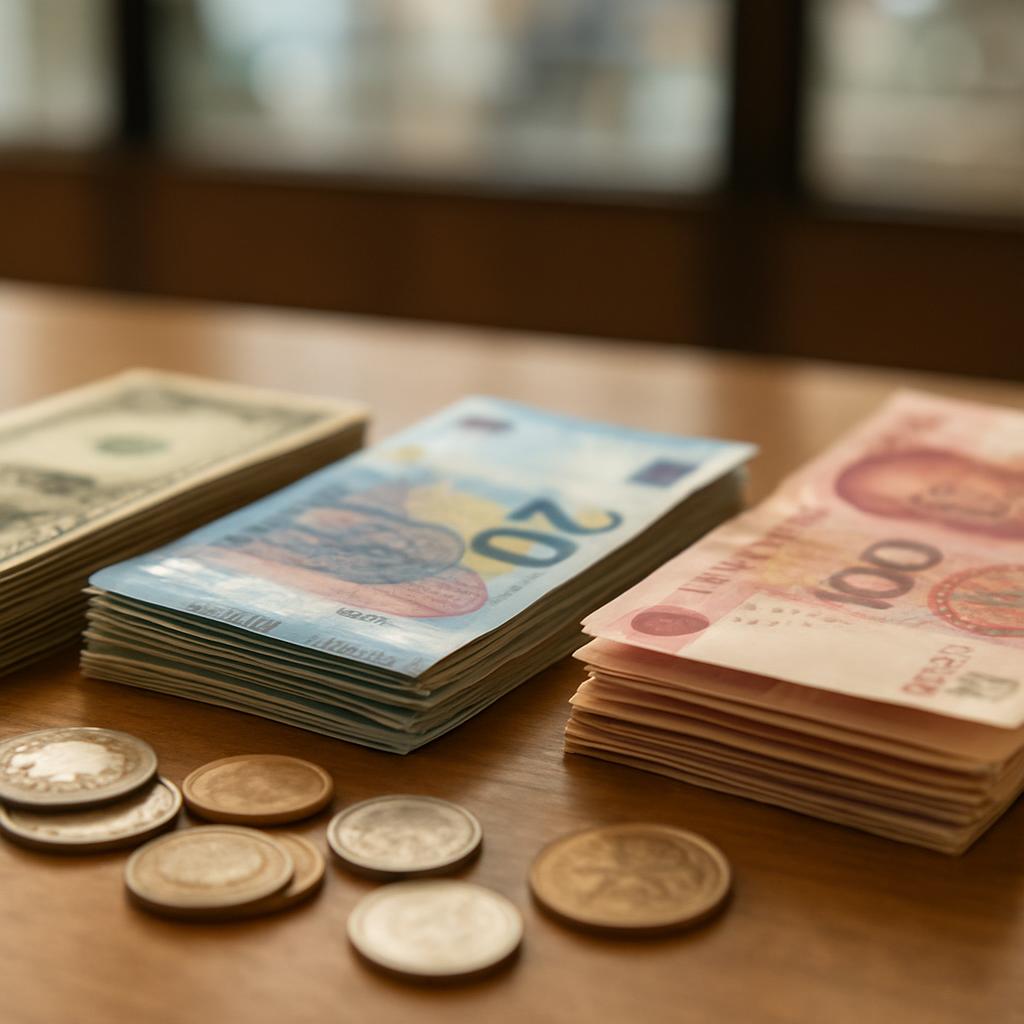
A currency revaluation is a deliberate decision by a government or central bank to officially raise the value of its currency compared with other currencies, gold, or a fixed benchmark like the US dollar. This is different from the everyday ups and downs you see in currency markets, which happen automatically based on supply and demand. Revaluations are most common in countries that manage or peg their exchange rate rather than let it float freely.
Key takeaways
- A currency revaluation is an official, government-led increase in a currency's value, usually under a fixed or managed exchange rate system.
- It is the opposite of a devaluation, and different from the daily appreciation or depreciation seen in free-floating currencies.
- A stronger currency makes imports cheaper and travel abroad cheaper, but can hurt exporters and tourism income.
- Countries like China have used managed revaluations in the past; most major currencies today, including the dollar, euro and yen, float and are not revalued by decree.
- Watch central bank statements and trade data for clues, since governments rarely announce revaluations far in advance.
What is a currency revaluation?
A currency revaluation happens when a government or central bank officially increases the value of its currency relative to another currency, a basket of currencies, or a fixed standard like gold. It is a policy action, not a market event, which sets it apart from the normal daily swings seen in currencies that trade freely.
Revaluations matter most in countries that use a fixed or pegged exchange rate, where the government sets the rate rather than letting buyers and sellers in the market decide it. In these systems, the central bank announces a new, higher official rate and then defends it by buying or selling currency reserves as needed.
In countries with floating currencies, like the United States, euro area, Japan and United Kingdom, the market sets the exchange rate every second. These currencies don't get 'revalued' by government order; instead, they appreciate or depreciate based on trading activity, interest rates, and economic news, including decisions from the Federal Reserve's interest rate policy.
How does a currency revaluation work?
A revaluation works by the government or central bank setting a new, stronger official exchange rate and then committing to maintain it. This usually applies to countries with a fixed peg, where the currency is tied to another currency like the US dollar, or to a managed float, where the central bank allows some movement but steps in to control the pace.
To make the new rate stick, the central bank often uses its foreign currency reserves. If it wants its currency to be worth more, it can sell foreign currency and buy its own currency, which pushes demand for its own money higher and supports the new, stronger rate. This takes significant reserves, so revaluations are usually planned carefully and announced all at once rather than gradually.
A well-known real-world example happened in July 2005, when China moved its yuan away from a strict peg to the US dollar and allowed it to strengthen by about 2 percent, later letting it adjust further over time. The move was watched closely by global markets because China is a major trading partner for many countries, and a stronger yuan changes the price of Chinese exports worldwide.
What causes a currency to be revalued?
A currency is usually revalued when a government decides its current exchange rate no longer reflects the country's economic strength, trade position, or inflation levels. Several common triggers show up again and again across history.
- Trade surpluses: A country selling far more abroad than it buys can face pressure, often from trading partners, to let its currency strengthen so trade becomes more balanced.
- Inflation control: A stronger currency makes imported goods cheaper, which can help cool domestic inflation.
- Capital inflows: Large amounts of foreign money flowing into a country can build pressure on a fixed rate that no longer matches market reality.
- Political and diplomatic pressure: Other governments or international bodies sometimes push a country to adjust an exchange rate seen as unfairly low.
- Correcting an outdated peg: Sometimes an old fixed rate simply no longer fits the economy decades later, and a reset becomes necessary.
These pressures build up over months or years before a government acts. Unlike floating currencies, which adjust constantly in small amounts, a managed currency can stay at an old rate for a long time until the gap with its true market value becomes too large to ignore.
How does revaluation affect households, businesses and investors?
A revaluation changes prices, profits and investment returns in opposite directions depending on who you are and what you buy or sell. A stronger currency is good news for anyone buying from abroad, and less welcome news for anyone selling abroad.
Households feel it mainly through the price of imported goods, gas, electronics and overseas travel, which generally get cheaper when the local currency strengthens. Businesses that rely on imported parts or materials benefit from lower costs, while exporters find their products suddenly cost more for foreign buyers, which can shrink overseas sales. Investors holding assets priced in the revalued currency may see the value of those holdings rise when converted back to another currency, but companies that earn most of their revenue overseas can see reported profits shrink.
| Effect | Currency revalued upward | Currency devalued downward |
|---|---|---|
| Imports | Cheaper for buyers | More expensive for buyers |
| Exports | More expensive for foreign buyers, can fall | Cheaper for foreign buyers, can rise |
| Inflation | Tends to ease | Tends to increase |
| Foreign travel from that country | Cheaper | More expensive |
| Exporter profits (in local currency) | Can fall | Can rise |
| Foreign investors holding local assets | Gains in value | Loses value |
None of this happens in isolation. A revaluation can also affect government debt owed in foreign currency, since a stronger local currency makes that debt relatively cheaper to repay, while a weaker one makes it more expensive.
How is revaluation different from devaluation, appreciation and depreciation?
Revaluation and devaluation are both official government actions, while appreciation and depreciation describe market-driven changes in a floating currency. The confusion between these four terms is one of the most common mistakes people make when reading about currencies.
- Revaluation: a government officially raises its currency's fixed or pegged value.
- Devaluation: a government officially lowers its currency's fixed or pegged value.
- Appreciation: a floating currency rises in value because of market trading, with no government order involved.
- Depreciation: a floating currency falls in value because of market trading, with no government order involved.
Most of the world's most-traded currencies, including the US dollar, euro, Japanese yen and British pound, float and therefore experience appreciation and depreciation rather than formal revaluation or devaluation. Countries that still manage their exchange rate closely, including several in the Middle East and parts of Asia, are the ones where the terms revaluation and devaluation still apply in practice today.
Where do things stand with currency revaluation in November 2026?
As of November 2026, most major global currencies continue to float freely, meaning they are not subject to formal revaluation by decree. A smaller group of countries maintain pegged or tightly managed currencies, and these are the ones where a revaluation remains a realistic policy tool.
Exchange rate policy can shift quickly in response to inflation data, trade tensions, or political pressure, so any specific country's peg arrangement should be checked against current central bank announcements rather than assumed to be permanent. Readers should check official central bank and treasury sources for the latest status of any specific currency peg, since policies that look fixed can change with little warning.
Broader monetary policy, including decisions on interest rates from major central banks, continues to influence currency values even without formal revaluations. Changes in US interest rate policy, for example, ripple through global currency markets because many countries price trade and reserves partly in dollars.
What does a currency revaluation look like in practice?
A simple hypothetical example shows how a revaluation changes everyday costs. Imagine a country called Lavalia pegs its currency, the laval, at 10 lavals to 1 US dollar. If Lavalia's central bank revalues the laval to 8 lavals per dollar, the laval has just gotten stronger.
Before the revaluation, an imported item costing 100 US dollars would cost 1,000 lavals. After the revaluation, that same 100 dollar item costs only 800 lavals, making imports cheaper for Lavalian households and businesses. But a Lavalian factory exporting goods priced at 1,000 lavals, which used to earn 100 dollars from a foreign buyer, now only earns 125 dollars worth of goods sold at the same laval price point relative to before... in reverse, the foreign buyer now has to pay more dollars for the same 1,000-laval product, which can reduce demand for Lavalia's exports.
This single, round-number example shows why governments weigh a revaluation carefully. It helps consumers and fights inflation, but it can squeeze exporters and factory jobs tied to overseas sales.
What should you watch next on currency revaluation?
Watch central bank statements, trade balance data, and inflation reports, since these are the clearest early signals that a managed currency may be due for a policy change. Large and persistent trade surpluses or deficits are often the first sign that a peg is becoming unstable.
It's also worth tracking statements from international bodies and major trading partners, since diplomatic pressure has historically played a role in past revaluation decisions, including China's shift away from a strict dollar peg. Interest rate decisions from major central banks, including the Fed's rate announcements covered in coverage of the FOMC's recent rate decision, also shape currency values indirectly even when no formal revaluation is involved.
Because currency policy can change quickly, readers should treat any specific figure or peg level as a snapshot in time and verify current details with official government and central bank sources before making decisions based on it.
Frequently asked questions
Does the United States ever revalue the dollar?
No, not in the formal sense. The US dollar floats freely in global markets, so its value rises and falls based on trading activity, not government decree. The last time the US fixed its currency to a standard was under the gold-backed Bretton Woods system, which ended in the early 1970s.
Is a currency revaluation good or bad for the economy?
It depends on the country's situation. A revaluation can ease inflation and lower import costs, but it can also hurt exporters and reduce competitiveness in foreign markets, so the overall effect depends on how reliant the economy is on trade.
What is the difference between revaluation and redenomination?
Revaluation changes how much a currency is worth compared with other currencies, while redenomination replaces old currency units with new ones, often to remove extra zeros after high inflation. A redenomination does not necessarily change the currency's real value at all.
Can a currency revaluation cause a bank run or economic crisis?
A sudden or poorly managed revaluation can shake confidence, especially if businesses or households were not prepared for the change. For broader questions about how economic stress affects personal bank accounts, see this explainer on whether banks can seize deposits during an economic collapse.
How often do currency revaluations happen?
They are relatively rare compared with daily market-driven currency moves, since most major economies now use floating exchange rates. Formal revaluations mainly occur in countries with pegged or managed currencies, and even there, governments tend to avoid frequent changes because they can unsettle markets and trade relationships.