
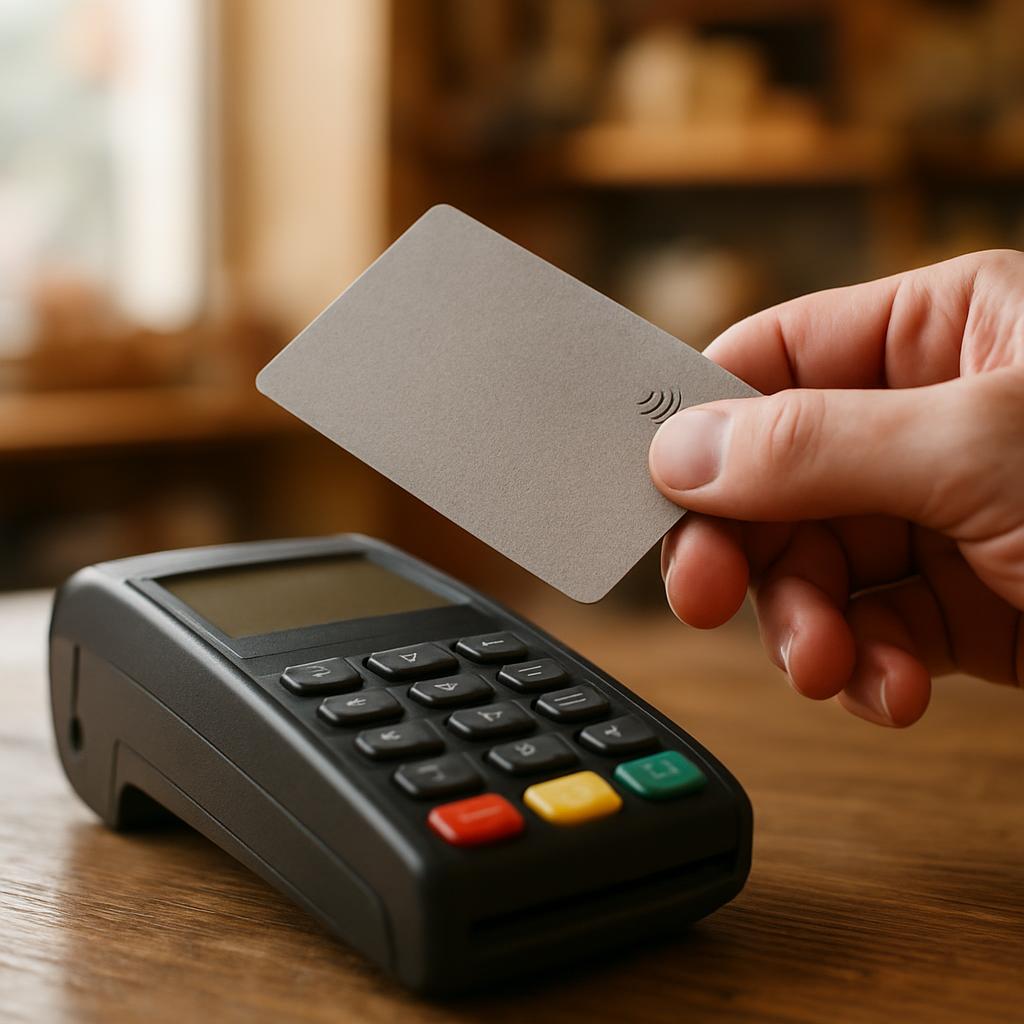
Most contactless card payments top out around $100 per tap in the United States before you need to enter a PIN or sign, though the exact figure depends on your card issuer, the payment network, and sometimes the store's own rules. These limits exist to balance convenience with fraud protection, since a tap requires no PIN or signature to verify the person holding the card. The cap can shift based on where you shop, what country you're in, and whether you're using a physical card or a phone wallet.
Key takeaways
- Contactless limits are set by card issuers and networks, not by a single fixed national rule
- In the US, many single taps stay under roughly $100 before a PIN is required
- Merchants can set their own lower limits, and some stores require a PIN on every purchase regardless of amount
- Phone-based wallets like Apple Pay or Google Pay sometimes allow higher limits because they use extra security steps
- Going over the limit just means entering a PIN or signing - it does not mean the payment fails
What counts as a contactless payment?
A contactless payment is any purchase made by tapping a card or device near a reader instead of swiping or inserting a chip. It uses short-range wireless technology called NFC, or near-field communication, built into the card or phone.
You'll usually see a small wave symbol printed on a contactless card or on the payment terminal itself. This symbol tells you the card and the machine can both talk to each other without physical contact.
Contactless payments include tapping a plastic debit or credit card, tapping a phone using a digital wallet, and tapping a smartwatch or wearable loaded with payment information. All of these work the same basic way underneath, even though the device looks different.
How does a contactless payment move from your card to the store?
A tap-to-pay purchase moves through several steps in just a second or two, even though it feels instant. Each step involves a different party checking and passing along the transaction information.
- You hold your card or phone near the terminal, and the NFC chip sends encrypted payment data to the reader.
- The store's payment terminal passes that data to its payment processor.
- The processor sends the transaction to the card network, such as Visa or Mastercard.
- The network routes the request to your bank, which checks your balance or credit limit.
- Your bank approves or declines the purchase and sends that answer back through the same chain.
- The terminal displays approval, usually within one or two seconds, and the sale is complete.
This entire process uses a one-time encrypted code for each transaction, which is different from the static information stored on a card's magnetic stripe. That is part of why contactless payments are generally considered safer than older swipe-based payments.
Who is involved when you tap to pay?
Four main parties work together behind every contactless purchase: the merchant, the payment processor, the card network, and your bank. Each one plays a specific role in approving and settling the transaction.
- Merchant: owns the terminal and accepts the payment at checkout
- Payment processor: moves transaction data between the store and the card network
- Card network: such as Visa, Mastercard, American Express, or Discover, which sets technical rules and contactless limits
- Issuing bank: the bank that issued your card and decides whether to approve the purchase based on your account
Card networks are the ones that typically set the technical rules for contactless limits, but banks can apply their own lower limits if they choose. This is why two people with cards from the same network might still see different caps on their accounts.
What is the typical limit for a contactless payment?
There is no single universal contactless limit, but many US transactions fall somewhere under $100 before a PIN is required. The exact number depends on the country, the card network's rules, and choices made by individual banks and merchants.
| Region | Typical contactless cap without PIN | Notes |
|---|---|---|
| United States | Often around $50-$100 | Varies by issuer and merchant |
| United Kingdom | Higher caps than the US, periodically adjusted | Set by national payment regulators |
| European Union | Varies by country, generally modest caps | Each country can set its own figure |
| Canada | Moderate caps, similar to US range | Set by individual banks |
These figures are general ranges, not fixed amounts, because every issuer and country can adjust them over time. If you want the exact number for your card, check your bank's app, your card's terms, or call the number on the back of your card.
Some merchants choose to set their own contactless limit lower than what the network allows, especially for businesses that see a lot of small fraud attempts. A few merchants require a PIN for every purchase no matter the amount, which overrides the usual tap-and-go experience.
Are there fees for using contactless payments?
Shoppers typically pay no extra fee for tapping a card instead of inserting or swiping it. The cost structure behind the scenes is the same as any other card purchase.
Merchants pay what's called an interchange fee to the card network and issuing bank for every transaction, whether it's contactless, chip, or swipe. This fee is usually a small percentage of the sale plus a flat amount, and it's built into how businesses price their products rather than charged separately to the customer.
Business owners choosing which cards to accept often compare these costs across card types, something covered in more detail in the comparison of business card options. For everyday shoppers, though, contactless itself adds no separate charge beyond what you'd already pay with any other card payment method.
What happens if something goes wrong with a tap-to-pay purchase?
If a contactless charge is wrong, unauthorized, or never delivered, you have the same dispute rights as any other card purchase. Contactless technology does not reduce your consumer protections.
Most banks let you dispute a charge through their app, website, or phone line, and federal rules limit your liability for unauthorized card use. Credit cards generally offer stronger fraud protection than debit cards, since debit disputes involve money already pulled from your account rather than a line of credit.
- Check your transaction history to confirm the charge is actually wrong.
- Contact the merchant first if it looks like a simple error, such as a duplicate charge.
- File a formal dispute with your card issuer if the merchant doesn't resolve it.
- Keep records of receipts, confirmation emails, and any communication with the store.
A lost or stolen card used for contactless purchases is treated the same as any other unauthorized use case. Reporting it quickly limits your financial exposure and triggers the bank's fraud investigation process.
How secure is contactless payment?
Contactless payments are generally considered as secure as, or safer than, swiping a card, because each transaction uses a unique encrypted code instead of reusing the same card number. This makes it much harder for a thief to copy and reuse stolen data.
A common worry is that someone could scan your card from a distance without your knowledge. In practice, NFC has a very short range, usually just a couple of inches, and most terminals require the card to be extremely close to register a payment, which makes random scanning in a crowd unlikely to succeed.
The PIN or signature requirement above a certain limit acts as a second layer of protection, so a stolen card can only be used for small purchases without further verification. Phone-based wallets add another layer, since they often require a fingerprint, face scan, or passcode before the tap even happens.
How does contactless compare with chip, PIN, and mobile wallets?
Contactless is faster than inserting a chip card but generally has a lower spending ceiling without extra verification. Chip-and-PIN transactions require entering a PIN for every purchase, which removes the dollar cap but takes a few seconds longer at checkout.
Mobile wallets like Apple Pay, Google Pay, and Samsung Pay use the same contactless technology as a physical card but often allow higher spending limits, since the phone or watch already confirmed your identity through a fingerprint, face scan, or passcode before the tap. This extra identity check is why some networks treat a wallet tap as lower risk than a bare card tap.
- Contactless card: fastest for small purchases, capped without a PIN
- Chip and PIN: no cap tied to tapping, but slower at the register
- Mobile wallet: often higher limits due to built-in device authentication
- Magnetic stripe: oldest and least secure, rarely required now except as a backup
Choosing between these methods usually comes down to speed versus purchase size. For a quick coffee or transit fare, a tap is fastest; for a large purchase, a chip-and-PIN or mobile wallet transaction avoids any risk of hitting a contactless cap mid-checkout.
Frequently asked questions
Can I raise my contactless limit?
Usually not directly, since the cap is set by your card network and sometimes your bank, not something you adjust yourself. You can contact your bank to ask about their specific policy, but most contactless caps are fixed by rules rather than customer preference.
Does splitting a purchase into two taps get around the limit?
No, most payment systems and merchants are set up to prevent this, and attempting it can flag your card for suspicious activity. Store staff are often trained to watch for repeated small taps that look like an attempt to avoid entering a PIN.
Do contactless limits differ by country?
Yes, each country's payment regulators and banks can set their own contactless thresholds, so a cap that applies in the US may not match the UK or EU. If you're traveling, check with your bank beforehand to understand what to expect abroad.
Is the limit the same for debit and credit cards?
Limits can differ between debit and credit even from the same bank, since each product may carry different risk rules. Your card's terms and conditions or your bank's app will usually show the specific limit tied to that card.
What happens if my tap is declined for going over the limit?
The terminal will usually prompt you to insert your chip and enter a PIN instead of completing the tap. This isn't a sign of fraud or a frozen account - it's simply the normal fallback built into the payment system.